Bakkhali
23 Feb 2024 | Birdwatchers Society | Led By : Hiya Chatterjee
🏝️ A TRIP REPORT

🏝️ “Birds of Passage” by Henry Wadsworth Longfellow
was the title poem in a short collection of poetry that Longfellow published in 1858. Any birder with an ear & eye for migration listens for flight calls or has a poetic touch, shall love this part of the poem, which is a pretty good description of what hearing birds migrating overhead is like.
In a move breaking away from tradition, Dr. Kanad Baidya (MD) ignited excitement by announcing the BWS Coastal Birding Camp 2024 in early November 2023. This was imperative as the Birdwatchers’ Society has been growing steadily, creating the need for not one but two birding camps during the financial year. The first camp, documented in the Trip Report featured in Fantail Vol 3, Issue 3 (Jan–Mar 2024), unfolded amidst the untamed beauty of Maredumilli, nestled deep in the forests of the Eastern Ghats, Eluru district, Andhra Pradesh, from December 11-15, 2023.
While the echoes of the first camp still lingered, the clamour for more resonated among members unable to partake in the Maredumilli adventure (lesser mortals like us included!). Swiftly, with an unwavering commitment, the Society arranged a second rendezvous near Kolkata. Bakkhali emerged as the perfect locale, offering a haven for migratory birds wintering along the coastal region. 23-25 Feb 2024 were the dates for the wild ride of reckoning for the BWS Bakkhali Coastal Birding Camp.
Located 120 km from Kolkata, Bakkhali is just a stone’s throw from the metropolis. Its vast stretches of sandy beach, wetlands, and meadows form part of the Gangetic Delta and the Sundarbans settlements. Along the Central Asian Flyway, Bakkhali provides crucial stopover points for migratory birds during their long journeys between breeding and wintering grounds. It’s a vital resting and refuelling site for these birds. Considering its strategic importance, the Birdwatchers’ Society has been conducting regular birding visits at Bakkhali.
Bakkhali boasts a diverse range of habitats, including mudflats, marshes, mangroves, and coastal wetlands among the islands of the Gangetic Delta. These habitats offer abundant food resources, such as small fish, crustaceans, and invertebrates, essential for the survival of migratory birds during their stopovers. Additionally, dense vegetation and mangrove forests offer nesting sites and protection for breeding pairs. The region is home to a wide variety of resident, migratory, and quite a few endangered species. Its rich biodiversity attracts migratory birds in large numbers, making it a key hotspot for birdwatching and conservation efforts.

It was a race against time to secure a spot. The call for action had barely begun before the limited seats were filled! The next announcement from the organisers came about engaging the professional services of Zigzag India Tours, represented by Soumya Kundu (a fellow birder & member of BWS). As D-Day came by, 21 members boarded the bus from Kolkata in addition to Soumya Kundu – Líder del tour. Initially, this camp was envisaged as a straightforward traditional exploration of the usual sites around Bakkhali, Frasergunj, and Henry Island.
Now, let me paint you a picture of the eclectic bunch that gathered for this feathered adventure. Picture this: like the versatility of a .22 calibre, this bunch of 22 eager bird enthusiasts (counting our fearless Tour Leader) packed a distinctively passionate punch. Amidst us, we had a triumphant trio of seasoned senior citizens aged 60 and up – still kicking it with the best! Matching up were the thriving three in their fabulous fifties, while the rest were a spectrum of youthful energy and midlife wisdom in their mid-20s to early 40s. Ah, but the fun doesn’t stop there! The testosterone-fuelled group of 20 hosted a fierce pair of female bird whisperers – maintaining sanity. Talking about expertise, a handful of five were the Gandalfs of the birding world, wielding years of knowledge like seasoned wizards, while the rest of us were eager learners armed with cameras, ready to capture every avian moment in pixelated glory.

🌞 Day 01 (24 Feb 2024) – Morning Session
Our revered Major (Maj BS Parihar) was kind enough to see off the team as it rolled out on a chartered bus from Karunamoyee, Salt Lake, at 1600 hrs, picking up participants along the route. The contingent checked into Hotel Inadoy at 2130 hrs on 23 Feb 2024 after completing a 4-hour journey with a pitstop mid-way.
As soon as we checked in, dinner was served. The next morning’s schedule was reiterated—troop out by 0545 hrs to head to the jetty and set sail at 0700 hrs. While most members hit the sack to be up early, a few late-night nocturnals gathered in the lobby for a spirited discussion until well past midnight.
The appearance of the elusive Scaly-breasted Rail, a handful of Whimbrels, and Gulls sparked a wildfire of enthusiasm among us. Moments later, the team was aboard MV Ayesha, our vessel bound for the mysterious shores of Jambudwip, bouncing on choppy waves, strong winds, and high hopes. Trips such as these are time-sensitive; the exploration had to be conducted during high tide to ensure the waders were inland and the boat could get closer to the island’s shoreline. With a representative of the Forest Department accompanying us, we set sail.
🌞 Day 01 (24 Feb 2024) – Morning Session
Jambudwip is an isolated island in the Bay of Bengal, about 8 km southwest of Frasergunj (Bakkhali). It is a Reserved Forest, and tourists are not allowed on the island. Forest Department permission is needed before embarking on a trip. During 08-09 February 2020, BWS organised a survey trip to Bakkhali and Jambudwip primarily for surveying waders. On the 9th morning, 12 members landed at Jambudwip to witness an overwhelming number of birds.
A detailed count was made read more about the trip at.
Read More →
Almost 70 minutes into sailing (around 0820 hrs), folks disembarked at Jambudwip using a makeshift ladder near the shore—a bit of a tricky act. The landing site was a sea of white sand, with the mangrove forest beaming further at the edge. The troop of 22, equipped with scopes, binos, and cameras, began a trek, scanning the skyline and beaches for their avian friends. Soon enough, vast flocks of waders were spotted flying along the farthest edge.

Waders are strong flyers, traversing oceans, mountains, and land to reach their wintering grounds. One has to be in the right habitat at the right time to catch a glimpse. The majority of wader species feed on small invertebrates picked from mud or exposed soil. Different bill lengths and types enable various species to forage in different patches within the same habitat. With flocks of 300+ birds whizzing across, having a wader expert like Sandip Das was a phenomenal asset! Among the shorebirds (waders) we observed were the Broad-billed Sandpiper, Terek Sandpiper, Ruddy Turnstone, Black-bellied Plover, Great Knot, and Red Knot, Curlew Sandpiper, Sanderling, Dunlin, Bar-tailed Godwit, Little Stint, and more—not to forget the lone Great Thick-knee. All sightings are included in the eBird Trip Report at the end. Over the next 2 hours and 30 minutes, members watched in awe as they observed the spectacular birds and their behaviors. No one realized how time had flown until frantic calls from our tour leader urged a quick evacuation—the tide was receding, and the boat needed to return to deeper waters.

🌞 Day 01 (24 Feb 2024) - Post Lunch
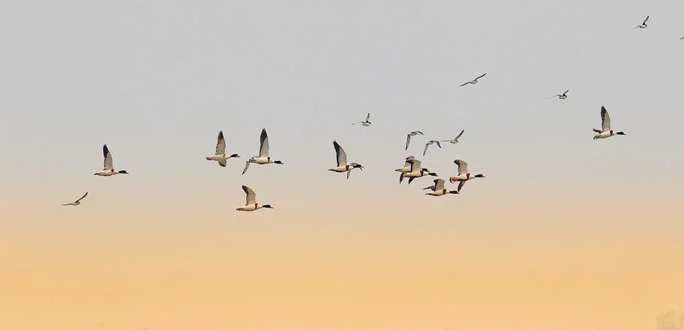
In the post-lunch session, the team took the noble chariot To-To (a.k.a. the electric rickshaw) to Kalisthan Beach. Roughly 5 km northeast of Bakkhali, this bustling fishing community greeted us as we arrived, with the low tide at its zenith, drawing the waterline back a couple of kilometers. Thirteen Common Shelducks marked the start of the session. The team split into three groups, venturing in different directions. While birding remained fruitful—with Pacific Golden-Plovers in near-breeding plumage, Whimbrels, Eurasian Curlew, Pallas’s Gull, and a host of other birds—it didn’t quite match the splendour of the morning session.
🌞 Day 01 (24 Feb 2024) - End Of The Day

While returning from Jambudwip and during the post-lunch session, an idea was mooted to explore Lothian Island (Lothian Wildlife Sanctuary). All the leaders, including Kanad and Soumya, echoed the sentiment and reworked the logistics. Thus, the second day’s endeavour was to explore a new location secluded from public access. This location, known as Balu-Char, lay within the Lothian Wildlife Sanctuary and required a permit from the Forest Department. Accessible only by boat from Bhagabatpur, the Forest Department was kind enough to assist us with the necessary permission and aboat for this trip. A combination of a larger boat and a smaller boat was essential to get closer to the birds. Back at the base camp—our place of stay—the team assembled after a quick refresh for a highly engaging session led by Sandip Das on waders, their behavior, feeding habits, and other intricacies. Sandip spoke about the first West Bengal record of the rare and endangered Nordmann’s Greenshank (Tringa guttifer), sighted by Mr. Milan Mandal, DFO South 24 Parganas, at Lothian Island on February 14, 2022.
In addition, he also narrated his own experience a year ago of how they sweated out to see the Nordmann’s Greenshank at Meidinagar Beach, WB . It seems the chosen location at Lothian Island was an ideal habitat for this bird, amongst others. It was a hugely exciting and gratifying session. Lots of interactions, high on spirits and upbeat with learnings for all.
A lip-smacking dinner with ice cream for dessert capped an inspiring and fruitful day. Without a doubt, camaraderie and humour were unwavering companions throughout the day and for the entire duration of the camp
🌞 Day 02 (25 Feb 2024) - Morning Session

We trooped out at 0500 hrs, warming up with steaming cups of tea to recharge after a short overnight rest, before rolling into the bus for a two-hour journey to Bhagabatpur Ghat. Those who missed a wink the night before had plenty of opportunity to catch up on sleep during the ride. Bhagabatpur Ghat (Jetty) sits on the bank of the Saptamukhi Estuary and is home to a Forest Department crocodile project, where Estuarine Crocodiles and the endangered Batagur baska tortoise species are bred. It also serves as the closest gateway to the Lothian Island Wildlife Sanctuary, a wintering ground for numerous migrant birds. We set sail on a passenger vessel at 0800 hrs, cruising partly along National Waterway 97 during high tide while towing a smaller 8-9 seater boat. The plan was to tranship closer to the shoreline into the smaller boat for the final approach to the island shore.As we navigated along the dense forest, we spotted Common Redshank, Blue-tailed Bee-eaters, Black-hooded Orioles, Brown-headed Gulls, Great and Little Cormorants, Great Egrets, and more. Balu Char, our target destination, took nearly 90 minutes to reach. The waterway was quite choppy and windy, adding to the adventure. As we neared our destination, flocks of waders began appearing in flight, heightening our anticipation. It was announced that the larger vessel would lay anchor as close as possible to the shore in a narrow channel, after which members would be transhipped onto the smaller boat for the final drop near the shoreline.
Just as the announcement was made, a chorus of VOWS! and UFFS! erupted. Amidst the flapping feathers and squawks of the regular avian crowd, not one but two majestic Eurasian Oystercatchers made a grand entrance!It was like spotting a pair of celebrities at a local diner—rare, jaw-dropping, and totally unexpected! You might think, “What’s the big deal about a couple of birds?” Well, let me tell you, these weren’t your average feathered friends. We’re talking about seriously sizeable, attention-grabbing shorebirds here! The excitement was so intense, you could practically taste it in the salty sea breeze.And here’s the kicker: the vessel’s pilot suddenly found himself struggling to maneuver the boat—not because of rough waters, but because he had to navigate through a sea of ecstatic birders, all clamoring for the best view! It was like trying to steer a ship through a swarm of overly enthusiastic puppies chasing a tennis ball. The smaller boat sailed alongside our trusty vessel, poised to unleash the first wave of intrepid explorers onto the scene. Adrenaline was pumping—it felt like the opening act of a blockbuster movie, with anticipation hanging in the air like a thick fog. But just as the balancing act amidst the waves was in full swing, our wader expert, Sandip, dropped an absolute bombshell: Nordmann’s Greenshanks were in the flock! Cue the collective gasps of awe from the group, eyes widening in sheer excitement. In an instant, all focus shifted—everyone was determined to spot these elusive birds before they took to the skies!
 Soon, the entire team was on the sand patch, wading through the knee-deep, squishy, and slippery shore, gasping and giggling at the rarest of the rare birds. This wasn’t just any old bird sighting—this was the holy grail of rare species! You could practically feel the energy crackling in the air as everyone scrambled to catch a glimpse of these elusive feathered marvels.
It was like a treasure hunt on steroids—a wild, priceless, and extraordinary day! Lothian Island, secluded far from the madding crowds, seemed to provide a safe haven for a good population of endangered and near-threatened species. An interesting observation, as pointed out by Sandip, was that in the large flock consisting of Eurasian Curlew, Great Knot, Red Knot, Black & Bar-tailed Godwit, Grey Plover, and Nordmann’s Greenshank, there wasn’t a single small wader. It was essentially a flock of medium-to-large waders!Meanwhile, the smaller waders, including Temminck’s Stint and Tibetan Sand-Plover, had chosen a separate patch further inland.

We trooped out at 0500 hrs, warming up with steaming cups of tea to recharge after a short overnight rest, before rolling into the bus for a two-hour journey to Bhagabatpur Ghat. Those who missed a wink the night before had plenty of opportunity to catch up on sleep during the ride. Bhagabatpur Ghat (Jetty) sits on the bank of the Saptamukhi Estuary and is home to a Forest Department crocodile project, where Estuarine Crocodiles and the endangered Batagur baska tortoise species are bred. It also serves as the closest gateway to the Lothian Island Wildlife Sanctuary, a wintering ground for numerous migrant birds. We set sail on a passenger vessel at 0800 hrs, cruising partly along National Waterway 97 during high tide while towing a smaller 8-9 seater boat. The plan was to tranship closer to the shoreline into the smaller boat for the final approach to the island shore.As we navigated along the dense forest, we spotted Common Redshank, Blue-tailed Bee-eaters, Black-hooded Orioles, Brown-headed Gulls, Great and Little Cormorants, Great Egrets, and more. Balu Char, our target destination, took nearly 90 minutes to reach. The waterway was quite choppy and windy, adding to the adventure. As we neared our destination, flocks of waders began appearing in flight, heightening our anticipation. It was announced that the larger vessel would lay anchor as close as possible to the shore in a narrow channel, after which members would be transhipped onto the smaller boat for the final drop near the shoreline.
The 22 BWS members brought together the wittiest humor, sharpest eagle eyes, and an unbreakable sense of camaraderie. The team included—Sandip Das, Kanad Baidya (Dr), Amritendu Mallick, Anshuman Roy, Dev and Krishnakali Baul, Dipankar Sinha, Nilay Raha, Ranjan Mitra, Rituparno Majumder, Sagar Adhurya (PhD), Santu Chowdhury, Sankha Misra, Saptarshi Mukherjee, Shubham Banerjee, Sudip Ghosh, Suman Das, Sourav Mondal, Swarnab Ghosh, and Tapasi Mukherjee (Ms).